
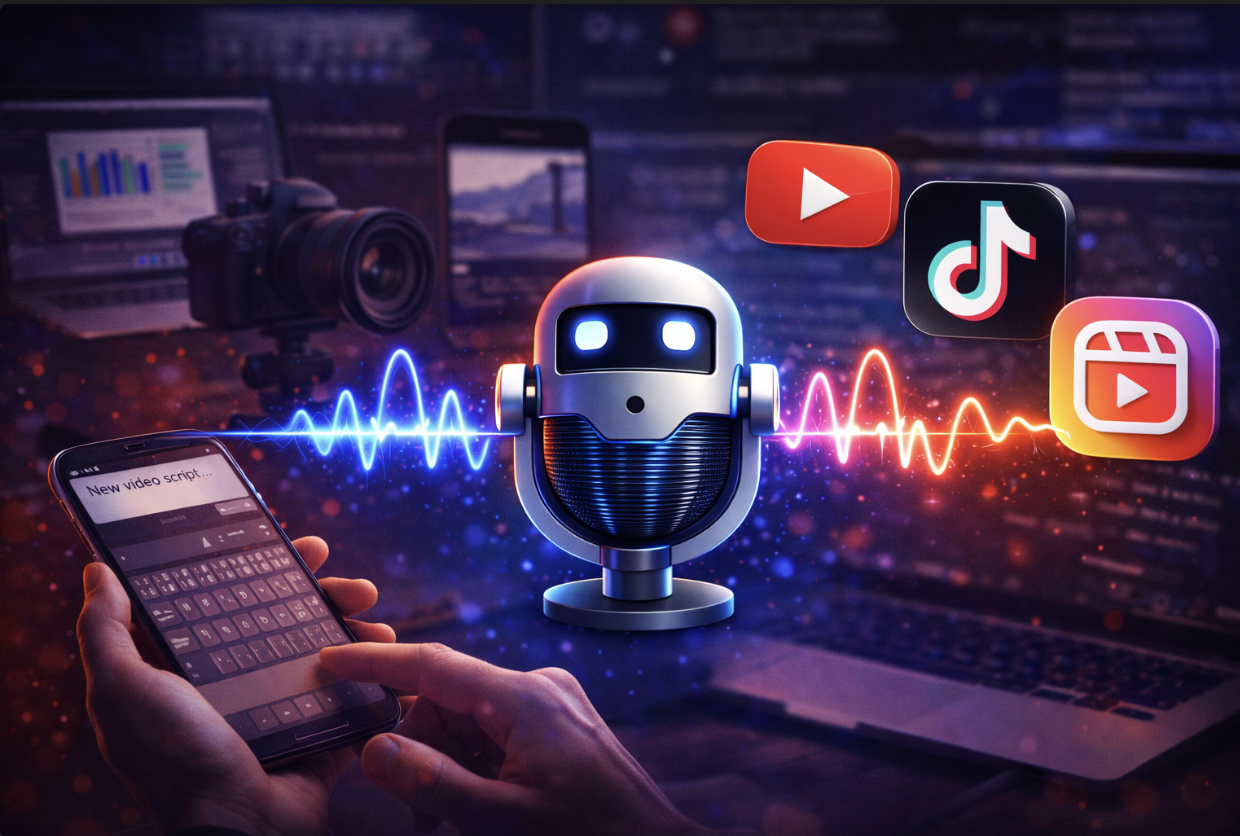
Content creation has never moved faster. Creators are expected to post more often, across more platforms, with higher quality, all while competing for attention in crowded feeds. For many, the biggest bottleneck isn’t ideas or visuals, but audio.
Recording voiceovers takes time. It requires a quiet space, good equipment, multiple takes, and editing. For creators trying to scale output, this step alone can slow everything down. That’s why AI text to speech for content creators has become one of the most widely adopted tools in modern creator workflows.
Instead of recording audio manually, creators can turn written text into natural-sounding speech in seconds. No microphone. No retakes. No editing headaches. Just clean, consistent voiceovers ready to use across videos, podcasts, social media, and more.
Why Content Creators Are Adopting AI Text to Speech
The creator economy rewards speed and consistency. Whether you’re a solo creator or running multiple pages, the ability to produce content efficiently is often more important than perfect production quality.
AI text to speech removes friction from the process. Once a script is written, audio generation becomes instant. This allows creators to focus on ideas, storytelling, and distribution rather than technical setup.
Another major reason creators adopt AI voices is consistency. Human recordings can vary depending on mood, environment, or energy level. AI-generated voices sound the same every time, which is especially valuable for brands, educational content, and serialized formats.
What AI Text to Speech Actually Is
AI text to speech converts written text into spoken audio using artificial intelligence trained on real human speech. Modern models understand pronunciation, pacing, emphasis, and pauses, which allows them to produce voices that sound natural rather than robotic.
For creators, this means you can write a script once and generate audio as many times as needed. If something changes, you edit the text and regenerate the voice instead of re-recording.
Because the process starts with text, AI text to speech integrates easily with other AI tools like script generators, video generators, and image tools.
Who AI Text to Speech Is For
AI text to speech is not limited to one type of creator. It’s used across many different niches and formats, each for slightly different reasons.
Faceless creators rely heavily on AI voices to narrate content without appearing on camera. Educational creators use it for clear, distraction-free explanations. Meme and short-form creators use it to scale output and test trends quickly. Even personal brands use AI voices or voice cloning to maintain consistency without recording daily.
What all these creators have in common is the need to produce more content without burning out.
How Content Creators Use AI Text to Speech
Most creators use AI text to speech as part of a repeatable workflow. The process usually starts with writing or outlining a script. This can be done manually or with AI writing tools.
Once the script is ready, it’s pasted into a text to speech generator where a voice is selected and previewed. The audio is generated instantly and downloaded for use in videos, podcasts, or other formats.
Because everything is digital, creators can easily:
- Update scripts without re-recording
- Test different hooks or tones
- Reuse the same script across platforms
- Maintain consistent voice output
This flexibility makes AI text to speech especially useful for creators working at scale.
Platforms Where AI Text to Speech Works Best
AI text to speech is widely used across major content platforms. On YouTube, it’s common in faceless channels, explainer videos, and Shorts. On TikTok and Instagram Reels, AI voices are everywhere, from storytelling and memes to educational clips.
Podcasts and audio-first formats also benefit. Creators can generate intros, outros, summaries, or even full episodes from written content. For blogs and newsletters, AI text to speech can be used to turn written posts into audio versions, expanding reach without extra effort.
Because the same voiceover can be reused across multiple platforms, AI text to speech supports a true multi-platform content strategy.
Voice Cloning for Personal Brands
Some creators want the efficiency of AI text to speech but still want their content to sound personal. Voice cloning bridges that gap.
By training an AI on a short audio sample, creators can generate voiceovers that sound like their own voice, without recording every time. This is especially useful for creators who post frequently or manage multiple channels.
Voice cloning allows personal brands to scale output while maintaining a consistent and recognizable voice across all content.
Advantages and Limitations of AI Text to Speech
AI text to speech offers clear advantages for content creators, but it still depends on how it’s used. Strong scripts and thoughtful pacing make a big difference.
The biggest advantages are speed, consistency, and scalability. Creators can produce more content in less time, revise easily, and maintain a consistent audio style across platforms.
At the same time, AI voices rely on good input. A poorly written script will sound flat no matter how advanced the voice model is. Emotional, highly personal content may still benefit from human recording, especially when authenticity is the main focus.
When used intentionally, AI text to speech becomes a productivity multiplier rather than a shortcut.
Is AI Text to Speech Allowed for Monetized Content?
Yes. AI-generated voices are allowed on most major platforms, including YouTube, TikTok, and Instagram, as long as content follows platform guidelines.
Monetization depends on originality, value, and compliance, not whether a voice is AI-generated. Many successful monetized channels use AI text to speech openly.
Creators should avoid misleading impersonation and clearly frame parody or character voices when applicable.
Why Motionize Works Well for Content Creators
Motionize’s AI text to speech tools are designed with creators in mind. You can generate high-quality voiceovers quickly, preview multiple voices, and reuse scripts without friction.
For creators who want more control, Motionize also offers voice cloning with Pro plans. This makes it easier to scale content while maintaining a consistent brand voice.
Because Motionize combines text to speech with other AI creation tools, it fits naturally into broader creator workflows rather than acting as a standalone feature.
When AI Text to Speech Makes the Most Sense
AI text to speech is especially effective if you:
- Create faceless or narration-heavy content
- Post frequently across multiple platforms
- Want consistent audio without recording daily
- Manage multiple pages or channels
- Need fast iteration and testing
If your goal is to create more content with less friction, AI text to speech is one of the most practical tools available.
Final Thoughts
AI text to speech has become a core tool for modern content creators. It removes one of the biggest bottlenecks in production and makes scaling content far more realistic for individuals and small teams.
When combined with strong ideas, good scripts, and thoughtful editing, AI-generated voices help creators stay consistent, experiment faster, and grow without burning out.
For creators who want to move faster without sacrificing quality, AI text to speech isn’t a trend, it’s infrastructure.
Frequently Asked Questions About AI Text to Speech for Content Creators
What is AI text to speech for content creators?
AI text to speech for content creators is a tool that converts written text into natural-sounding audio using artificial intelligence. Creators use it to generate voiceovers for videos, podcasts, social media, and other content without recording audio manually.
Why do content creators use AI text to speech?
Content creators use AI text to speech to save time, stay consistent, and scale their output. Instead of recording voiceovers for every piece of content, creators can generate audio instantly from scripts and focus more on ideas, visuals, and distribution.
Is AI text to speech good for faceless content creators?
Yes. AI text to speech is especially popular among faceless content creators. It allows narration without showing your face or using your own voice, making it ideal for faceless YouTube channels, TikTok pages, and Shorts-focused accounts.
Can I monetize content made with AI text to speech?
Yes. Most platforms, including YouTube, TikTok, and Instagram, allow monetization of content that uses AI-generated voices. Monetization depends on originality and quality, not whether the voice is AI-generated.
Does AI text to speech sound realistic?
Modern AI text to speech voices sound very natural. They include realistic pacing, pauses, and pronunciation. While emotional depth still depends on the script, many viewers cannot easily distinguish high-quality AI voices from human narration.
Is AI text to speech allowed on social media platforms?
Yes. AI text to speech is allowed on major platforms as long as the content follows community guidelines. Many creators openly use AI voices for videos, Shorts, Reels, and memes without issues.
Can I use AI text to speech for YouTube, TikTok, and Reels?
Yes. AI text to speech works well across platforms. Creators commonly use it for YouTube videos, YouTube Shorts, TikTok content, Instagram Reels, and other short-form or long-form formats.
Can I use my own voice with AI text to speech?
Yes. With voice cloning tools, content creators can train an AI using a short sample of their own voice. This allows them to generate voiceovers that sound like them without recording every time.
Is AI text to speech better than recording voiceovers manually?
AI text to speech is faster and more scalable than manual recording, especially for creators who post frequently. Manual recording may still be preferred for highly personal or emotional content, but AI voices excel for speed, consistency, and volume.
Do I need technical skills to use AI text to speech?
No. Most AI text to speech tools are beginner-friendly. If you can write or paste text, you can generate voiceovers without audio editing experience or recording equipment.
What type of content works best with AI text to speech?
AI text to speech works best for narration-heavy content such as explainer videos, educational content, faceless channels, storytelling videos, social media clips, and short-form content that requires fast production.